
AI Overview
Invisalign is a clear aligner system that straightens teeth without the metal and wires of traditional braces. In South Africa, treatment typically runs between R45,000 and R90,000 depending on case complexity, and most adults complete treatment in 12 to 18 months. At Designer Smiles Inc. in Rosebank, Johannesburg, we combine digital scanning, holistic dentistry and tailored treatment plans to deliver predictable, comfortable results.
Key takeaways:
- Invisalign uses a series of custom-made, removable clear aligners to shift teeth gradually.
- Treatment length usually sits between 6 and 24 months depending on the issue.
- The invisalign cost in South Africa varies by complexity, provider experience and the number of aligner trays needed.
- Most medical aids partially cover orthodontics: in-house payment plans are widely available.
- Daily wear of 20–22 hours is non-negotiable for results.
Crooked teeth, gaps and bite issues don’t only affect how your smile looks. They influence how you chew, speak and even how confidently you show up at a meeting in Sandton or a wedding in the Cape Winelands. If you’ve been weighing up your options, this guide unpacks everything South Africans need to know about clear aligners in 2026, including realistic costs, the treatment journey, and how we approach it at Designer Smiles Inc.
Key Takeaways
- Invisalign uses custom-made, removable clear aligners to gradually shift teeth, requiring 20–22 hours of daily wear for optimal results and avoiding the metal brackets and wires of traditional braces.
- Invisalign treatment in South Africa costs between R45,000 and R90,000 depending on case complexity, number of aligners and provider experience, with most adults completing treatment in 12 to 18 months.
- Unlike mail-order aligner systems, Invisalign at a qualified practice includes in-person supervision every 6–8 weeks and digital 3D scanning to ensure proper tooth tracking and prevent complications like root resorption.
- Invisalign can address crowding, gaps, overbites, underbites, crossbites and open bites, making it suitable for both mild cases and complex orthodontic problems requiring bite correction.
- Most South African medical aids partially cover orthodontics for dependants under 21, whilst adults can access in-house payment plans and third-party medical financing to spread the cost of treatment.
- Proper aligner care—rinsing in lukewarm water, gentle brushing with soap, and avoiding eating or drinking with them in—keeps them invisible and extends their lifespan throughout your treatment journey.
What Is Invisalign and How Does It Work?
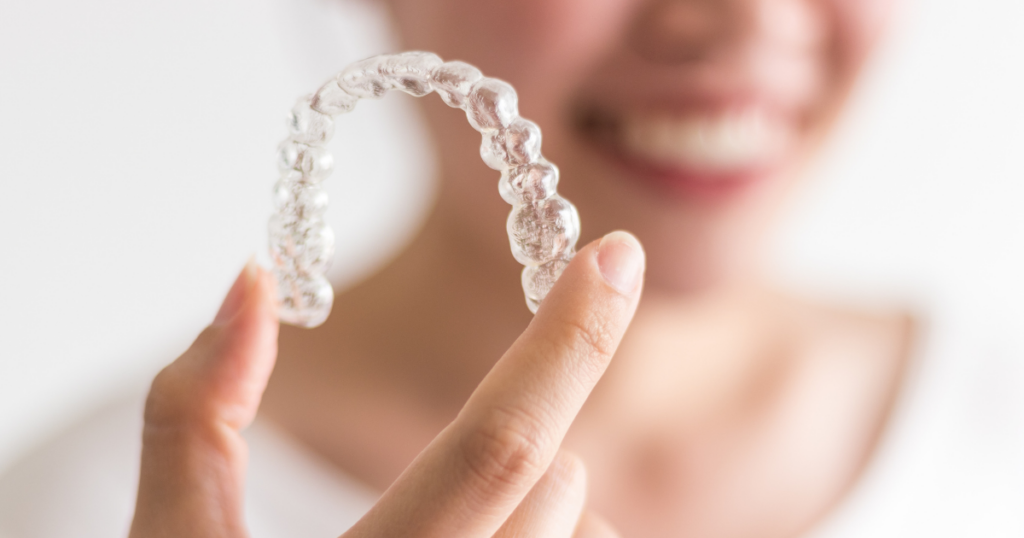
So, what is Invisalign exactly? It’s an orthodontic system that uses a series of clear, BPA-free thermoplastic trays, called aligners, to move your teeth into position. Each tray is custom-made from a 3D digital scan of your mouth, and each one is slightly different from the last. As you move through the series, your teeth shift incrementally, usually around 0.25mm per tray.
Here’s the part most people find appealing: the aligners are nearly invisible, and you take them out to eat, brush and floss. There are no brackets glued to your teeth and no wires to tighten. The Invisalign system was developed by Align Technology in the late 1990s and now has data from more than 17 million treated patients globally, which gives us a deep evidence base to work from when planning cases.
Expert Tip: The aligners work best when worn 20 to 22 hours a day. Treating them like a part-time accessory is the fastest way to delay your results.
How Invisalign Compares to Traditional Braces and Other Aligners for Teeth
Not all aligners for teeth are created equal. Mail-order brands, in-house clear aligner systems and traditional metal braces all exist on the same shelf, but they don’t deliver the same outcomes. Here’s how they stack up.
| Feature | Invisalign at Designer Smiles | Traditional Metal Braces | Mail-Order Aligners |
| Visibility | Nearly invisible | Highly visible | Nearly invisible |
| In-person dentist supervision | Yes, every 6–8 weeks | Yes, every 4–6 weeks | Usually none |
| Suitable for complex cases | Yes, including bite correction | Yes | Mild cases only |
| Removable | Yes | No | Yes |
| Average treatment time | 6–18 months | 18–24 months | 4–6 months |
| Diagnostic scanning | iTero 3D scan | Physical impressions | Self-taken impressions |
Industry Insight: Mail-order options may seem cheaper upfront, but the South African Dental Association has repeatedly flagged the risks of unsupervised orthodontic treatment, including root resorption and bite collapse. A qualified clinician needs eyes on your progress.
Dental Issues Invisalign Can Correct
Invisalign has come a long way from being a fix for mild crowding. Today, with attachments and elastics, it handles a surprisingly wide range of orthodontic problems. Cases we routinely treat at our Rosebank practice include:
- Crowding where teeth overlap or twist due to limited jaw space.
- Spacing and gaps, including diastemas between the front teeth.
- Overbite where the upper teeth cover too much of the lower teeth.
- Underbite where the lower jaw sits forward of the upper.
- Crossbite where upper and lower teeth don’t meet correctly on one or both sides.
- Open bite where front teeth don’t touch when the back teeth are closed.
- Relapse cases for adults whose teeth shifted after childhood braces.
There are still edge cases where fixed braces or surgical orthodontics remain the better call, usually severe skeletal discrepancies or significant rotations on canines and premolars. That’s why our consultation always starts with a full diagnostic workup rather than a sales pitch.
The Invisalign Treatment Journey Step by Step
Knowing what’s ahead takes the mystery out of the process. Here’s how we walk patients through treatment from first visit to final retainer.
Consultation, 3D Scanning and Treatment Planning
Your first appointment is a proper conversation. We look at your bite, take clinical photographs, and run an iTero intraoral scan that builds a digital 3D model of your teeth in under five minutes. No goopy impression trays. From that scan, we map out your tooth movements using ClinCheck software, which gives you a video preview of your projected final smile before you commit to anything.
This is also the stage where we discuss the price of Invisalign for your specific case, treatment length, and whether attachments (small tooth-coloured bumps that help aligners grip) will be needed.
Wearing, Switching and Tracking Your Aligners
Once your custom trays arrive from the Align Technology lab, we fit your first set and show you how to insert and remove them without warping the plastic. You’ll typically switch to a new aligner every 7 to 14 days, depending on your prescribed protocol.
Check-ins happen every 6 to 8 weeks, either in-person or via the My Invisalign app, which lets you upload progress photos. If a tooth isn’t tracking as planned, we adjust early rather than at the end. Quick tip: keep your previous aligner as a backup in case you lose your current one before the next set arrives.
Invisalign Cost in South Africa: What to Expect in 2026
Let’s talk money, because this is the question we hear first in nearly every consultation. The Invisalign cost in South Africa in 2026 generally ranges from R45,000 for mild cases (Invisalign Lite or Express, up to 14 aligners) to R90,000 or more for full comprehensive treatment. Teen and adolescent protocols sit in a similar bracket.
Factors That Influence the Price of Invisalign
Several things drive what you’ll actually pay:
- Case complexity: A few crowded front teeth costs less than full-arch correction with bite changes.
- Number of aligners: More trays means more lab fees from Align Technology.
- Clinician experience: Diamond and Platinum Invisalign providers handle complex cases that general dentists may refer out.
- Refinement aligners: Most plans include refinements, but some providers charge separately.
- Retainers: Vivera retainers after treatment are usually quoted on top of the base fee.
Medical Aid, Payment Plans and Financing Options
Most South African medical aids, including Discovery, Bonitas and Momentum, offer partial orthodontic benefits, typically under dependant cover for under-21s. Adults often pay out of pocket, but at Designer Smiles Inc. we offer in-house payment plans that split the fee over the treatment period, plus options through third-party medical financing providers. We give you a clear, itemised quote upfront, so there are no surprise add-ons halfway through.
Caring for Your Aligners and Maintaining Results
Looking after your aligners is genuinely simple, but skipping the basics will stain them and shorten their lifespan. Here’s what we tell every patient on day one:
- Rinse aligners in lukewarm water every time you remove them. Hot water warps the plastic.
- Brush them gently with a soft toothbrush and clear, unscented soap. Toothpaste is too abrasive.
- Never eat or drink anything other than water with your aligners in. Coffee, rooibos and red wine will stain them within days.
- Brush and floss before reinserting to avoid trapping sugars against your enamel.
- Store them in their case when out of your mouth. Wrapping them in a serviette at a restaurant is the number one way they end up in the bin.
Once active treatment ends, retainers are non-negotiable. Teeth have memory and will drift back if unsupported, particularly in the first 12 months. We usually prescribe Vivera retainers worn full-time for three to six months, then nightly indefinitely.
Visit Us
Designer Smiles Inc., Rosebank, Johannesburg. We proudly serve patients across Sandton, Houghton, Parktown and the greater Johannesburg area. Book your Invisalign consultation through our official website and let Dr. Sebasch Ranchod and our team build a treatment plan around your smile, your budget and your lifestyle. A straighter, healthier smile is closer than you think, so let’s get started.
Frequently Asked Questions About Invisalign
What is Invisalign and how does it work?
Invisalign is a clear aligner system using custom-made, removable thermoplastic trays to gradually shift teeth into position. Each tray is tailored from a 3D digital scan and moves teeth around 0.25mm per tray. Unlike traditional braces, there are no brackets or wires, and you can remove aligners to eat and brush your teeth.
How much does Invisalign cost in South Africa?
Invisalign treatment in South Africa typically costs between R45,000 for mild cases and R90,000 or more for comprehensive treatment. Costs depend on case complexity, the number of aligner trays, clinician experience, and whether refinements are needed. Most medical aids offer partial coverage, and in-house payment plans are widely available.
How long does Invisalign treatment take?
Most adults complete Invisalign treatment between 12 and 18 months, though cases can range from 6 to 24 months depending on the issue’s complexity. Treatment length is determined during your initial consultation based on your specific tooth movements and bite correction needs.
What dental problems can Invisalign correct?
Invisalign corrects crowding, gaps, overbites, underbites, crossbites, open bites, and relapse cases from previous braces. It handles increasingly complex issues with attachments and elastics. However, severe skeletal discrepancies may require traditional braces or surgical orthodontics instead.
How many hours a day must I wear my Invisalign aligners?
You must wear your aligners 20 to 22 hours daily for optimal results. Wearing them part-time significantly delays treatment progress. Remove them only for eating, drinking (except water), brushing and flossing your teeth.
What’s the difference between Invisalign and mail-order clear aligners?
Invisalign offers in-person dentist supervision every 6 to 8 weeks, is suitable for complex cases including bite correction, and uses professional 3D scanning. Mail-order aligners typically lack professional supervision, handle only mild cases, and risk serious complications like root resorption or bite collapse without qualified monitoring.