
A first dental check-up takes roughly 30 to 45 minutes and covers a full examination of your teeth, gums, bite and soft tissues, including an oral cancer screening. It usually involves bitewing X-rays and a scale and polish with the oral hygienist, and finishes with a written treatment plan if anything needs attention.
If you are nervous, or you have been putting this off for years, you are in the right place. This guide walks you through exactly what happens in the chair, in what order, and what each part involves. No jargon, no lectures, no judgement. If you are still choosing where to go, our dentist near me page shows both practices.
Key Takeaways
- A dental check-up takes roughly 30 to 45 minutes and covers your teeth, gums, bite and soft tissues, plus an oral cancer screening, X-rays where needed and a professional clean.
- Most adults are seen every six months, though your dentist may set a shorter or longer recall interval based on your gum health, cavity risk and medical history.
- Catching decay, gum disease and oral cancer early usually means simpler, gentler treatment than waiting until something hurts.
- If you have avoided the dentist for years, say so when you book. It changes nothing except that a little extra time is allowed.
- Before your appointment, brush and floss normally, bring your ID and medical aid details, and write down anything you have noticed in your mouth.
What Happens at a Dental Check-Up?
A dental check-up is a full health screening of your mouth, not just a look at your teeth. In one visit the dentist checks for tooth decay, gum disease, bite problems and signs of oral cancer, all of which are simpler and gentler to treat when caught early.
Most people think of the dentist as the tooth person. Fair enough. But small problems in the mouth have a habit of becoming bigger ones quietly. A cavity you cannot feel today can become a much larger job later. Gum inflammation you have been ignoring can loosen teeth that felt fine last year.
A check-up also picks up things that have nothing to do with your teeth: mouth ulcers that have not healed, unusual patches on the tongue or cheek, jaw joint problems, or grinding wear that points to stress.
Your First Appointment, Step by Step
A first check-up follows a predictable order: paperwork and medical history, a full examination, X-rays if needed, a professional clean, then a discussion of what was found.
- New patient records and medical history
- Examination of teeth, gums, bite and soft tissues
- Bitewing X-rays, if clinically indicated
- Scale and polish with the oral hygienist, sometimes booked separately
- Treatment plan discussion and booking any follow-ups
The Welcome and Medical History
Before anyone looks in your mouth, we take a full medical history. This is not box-ticking. Medications, allergies, heart conditions, diabetes, pregnancy and recent illnesses all affect how we approach your care. You will fill in a new patient form, then talk through anything relevant with the dentist. If you are nervous, that belongs on the form too.
The Examination
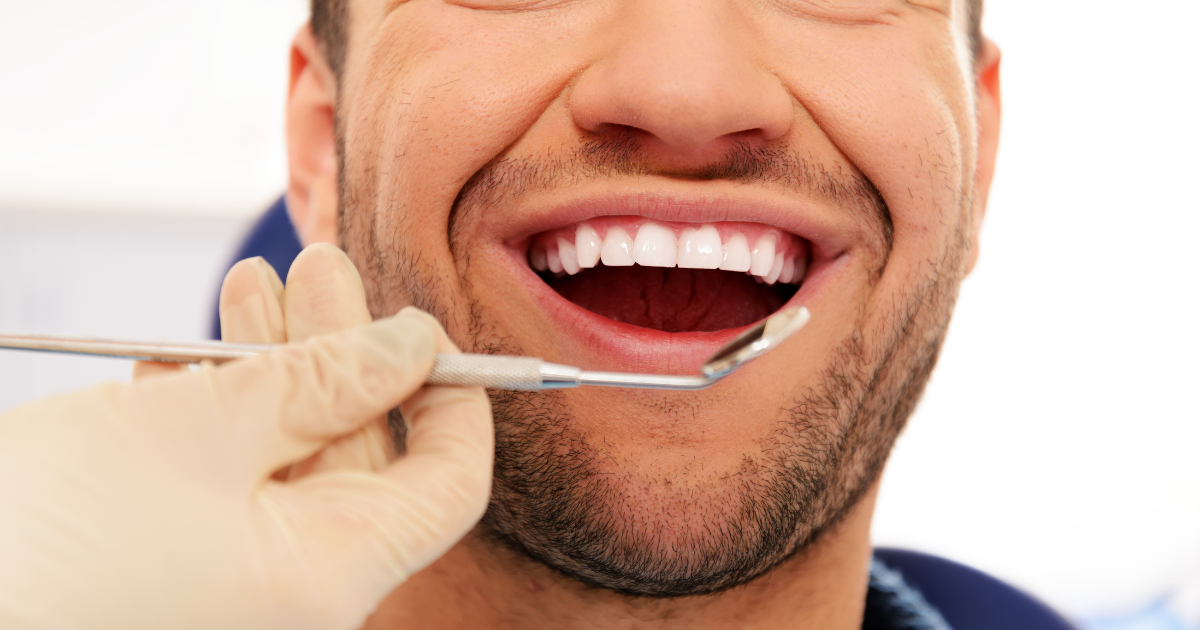
The examination itself is quiet and methodical. The dentist works through every tooth, checking for decay, cracks, worn fillings and bite issues. Then comes the gum assessment, sometimes with periodontal probing, a small measuring instrument that checks the depth of the space between tooth and gum. It can feel slightly prickly but should not be painful.
The oral cancer screening is a careful look at the tongue, cheeks, floor of the mouth, palate and the lymph nodes in the neck. It is quick, and it is one of the most important parts of the visit.
X-rays
Bitewing X-rays show what sits between teeth and under existing fillings, where the eye cannot reach. They are low-dose and quick, and they are only taken when the result will actually change what happens next.
The Clean
The clean is usually done by an oral hygienist, who removes plaque and tartar, the hardened deposit a toothbrush cannot shift, then polishes the teeth. Some patients enjoy this part. Others find it ticklish or a little sensitive. Tell your hygienist either way. If cost comes up at any point, we are upfront about what a dental visit costs before any treatment starts.
Your Treatment Plan
You leave with a written treatment plan setting out what was found, what needs doing, and in what order. If nothing needs doing beyond your clean, we simply book your next recall. Outcomes vary from patient to patient, and nothing is scheduled without your say-so. To see the full range of what we offer, take a look at our treatments page.
How Long Does a Dental Check-Up Take?
A first dental check-up typically takes about 30 to 45 minutes. Follow-up check-ups are often shorter, because your records and baseline are already in place. If a scale and polish is booked into the same visit, allow a little more time. Nervous patients and complex cases are given more chair time by arrangement, which is another reason to mention it when you book.
Will It Hurt?
A routine check-up should not be painful, although some parts can feel uncomfortable. Periodontal probing and scaling around inflamed gums are the two that patients notice most, particularly if the gums are already sore.
Tell your dentist if anything hurts. They can pause, adjust technique, or discuss numbing options before continuing. We cannot promise you will feel nothing at all, but we can work to keep you comfortable throughout.
Nervous About the Dentist? What to Say Before You Book
Dental anxiety is common, and there is a lot we can do to make the appointment easier, but only if you tell us. The single most useful thing you can do is mention it when you book, so the visit can be planned around it rather than managed in the chair.
Before the appointment:
- Book a morning slot so you are not thinking about it all day.
- Eat something light beforehand. Low blood sugar makes anxiety worse.
- Skip strong coffee. Caffeine amplifies a racing heart.
- Bring earphones and a playlist or podcast if sound is a trigger.
- Bring someone with you if that helps.
During the appointment, agree a stop signal with your dentist, usually a raised left hand. It means pause, not stop forever, and knowing you can pause at any point is often enough on its own. If you have a strong gag reflex, say so. There are positioning techniques that help.
If you are embarrassed about the state of your teeth, please read this. Every practice in the country has patients who have not been in for five, ten, sometimes twenty years. It is far more common than you think, and nobody is going to lecture you. You do not need to tidy your teeth up before you come. That is our job. Tell reception it has been a while and we will simply allow extra time. If something is sore, say so first and we deal with the pain before anything else.
How Often Should You Go to the Dentist?
For most adults, a six-monthly check-up is the standard recommendation, though your dentist may set a different recall interval based on your own risk factors. Some patients are seen every three or four months. Others, with very stable mouths, can stretch to once a year.
What changes the interval:
- Gum health. A history of periodontal disease usually means more frequent visits to keep it stable.
- Cavity risk. High-sugar diets, dry mouth from medication, or a history of fillings tend to shorten the interval.
- Smoking and vaping. Both raise the risk of gum disease and oral cancer.
- Pregnancy. Hormonal changes affect the gums, so an extra visit is often sensible.
- Braces, implants or crowns. These need closer monitoring.
If it has been years rather than months, do not overthink the interval. Book the first appointment and the right rhythm gets worked out from there.
What to Bring and How to Prepare
Preparation is simple: brush and floss normally, bring your ID and medical aid details if you have them, and make a short list of anything you have noticed in your mouth.
- ID document and medical aid card if applicable.
- A list of medications you take, including supplements.
- Notes on symptoms: sensitivity to hot or cold, bleeding gums, a tooth that catches food, jaw clicking, mouth ulcers.
- Your questions, written down. They are very easy to forget in the chair.
- Old X-rays or records from a previous practice, which can save repeating imaging.
On the day, arrive about ten minutes early so you are not rushing the paperwork. Brush as you normally would. There is no need to scrub extra hard or use whitening products first. Just come as you are.
If you are in pain right now, do not wait for a routine check-up slot. Call the practice and say so. Our dental emergency guide explains what to do in the meantime.
Booking Your Check-Up at Designer Smiles
We see patients at our Rosebank and Bedfordview practices. Whether it is your first visit ever or your first in a decade, we will take it at your pace, and you will get a written plan before anything is booked.
Frequently Asked Questions
What happens at a dental check-up?
A dental check-up covers a full examination of your teeth, gums, bite and soft tissues, including an oral cancer screening. It usually includes bitewing X-rays where needed and a scale and polish with the oral hygienist. You leave with a written treatment plan if anything needs attention, or a booking for your next recall.
How long does a dental check-up take?
A first dental check-up typically takes about 30 to 45 minutes. Follow-up check-ups are often shorter because your records are already in place. If a scale and polish is booked at the same visit, allow a little extra time. Nervous patients and complex cases are given more chair time by arrangement.
How often should you go to the dentist?
Most adults benefit from a six-monthly check-up, but your dentist will set a recall interval based on your gum health, cavity risk, medical history and lifestyle. Some patients need visits every three to four months, for others once a year is enough. If it has been years, just book the first visit.
Does a dental check-up hurt?
A routine dental check-up should not be painful, though some parts, such as periodontal probing or scaling around inflamed gums, can feel uncomfortable or sensitive. Tell your dentist if anything hurts and they can pause, adjust technique or discuss numbing. We cannot promise zero sensation, but we can work to keep you comfortable.
Do I need X-rays at my first visit?
Bitewing X-rays are commonly taken at a first visit because they show decay between teeth and under existing fillings that a visual examination can miss. They are low-dose and quick. If you have recent X-rays from another practice, bring them along and it may not be necessary to repeat them straight away.
What if I have not been to a dentist in years?
You are welcome, and you will not be judged. Long gaps are common. Mention it when you book so extra time can be allowed. If you are in pain right now, see our dental emergency guide instead. Otherwise book a standard check-up and the best route forward gets worked out together.
Where to Find Us
Designer Smiles Inc is a cosmetic and holistic dental practice with rooms in Rosebank and Bedfordview. Both see new patients.
Designer Smiles Inc, Rosebank
Address: Lumley House, 177 Jan Smuts Ave, Rosebank, Johannesburg, 2196
Phone: 011 326 0938
Hours: Mon to Fri 08:00 to 16:00
Designer Smiles Inc, Bedfordview
Address: 20A Kloof Road, Cnr The Parade, Sarlan Park, Bedfordview, Johannesburg, 2008
Phone: 011 615 9352
Hours: Mon to Fri 08:00 to 16:00
Book a check-up at our Rosebank or Bedfordview rooms and we’ll take it at your pace, with a written plan before anything is scheduled.
Book a Check-Up