
If your child’s teeth are coming in crowded, crooked, or with a noticeable bite problem, the first question most parents have is not about cost, it is timing. Many orthodontists suggest an initial evaluation from around age seven, once the first adult molars and incisors have come through, even though actual treatment (braces going on) usually happens later, often somewhere in the pre-teen or early teenage years once more permanent teeth have erupted. There is no single correct age for every child, an evaluation is what actually tells you.
If cost is already on your mind, our full braces in Johannesburg guide breaks down pricing by treatment type. This piece focuses on the two questions that usually come first for parents: is my child at the right age, and who do I actually take them to see.
There is no fixed age at which every child needs braces. An orthodontic evaluation, often suggested from around age seven, is what determines whether your child needs early monitoring, an interceptive step, or can simply wait until more of their adult teeth are through. Your general dentist is usually the right first stop, and they will refer you on if orthodontic treatment is needed.
Key Takeaways
- An orthodontic evaluation is about timing, not necessarily an immediate fitting, many children are simply monitored for a few years first.
- Your general dentist is usually the right first stop for braces for kids, they will refer you to an orthodontist if needed.
- Signs to watch for include crowding, a visible bite problem, or baby teeth that are coming out unusually early or late.
- Cost varies by treatment type and is covered in full in our separate braces in Johannesburg guide, this article focuses on age and next steps.
Signs Your Child May Need Braces
Not every crooked baby tooth means orthodontic treatment is on the way, plenty of early crowding sorts itself out as a child’s jaw grows. A few signs are worth mentioning to your dentist at your child’s next dental check up rather than waiting for a scheduled orthodontic consultation.
Crowded or Overlapping Teeth
Adult teeth coming in twisted, overlapping, or with visibly too little space in the jaw for them to sit straight.
A Noticeable Bite Problem
An overbite, underbite, or crossbite that is visible when your child bites down normally, or teeth that do not meet evenly.
Early or Late Baby Tooth Loss
Baby teeth falling out much earlier or later than siblings or peers of a similar age, which can affect how adult teeth come through.
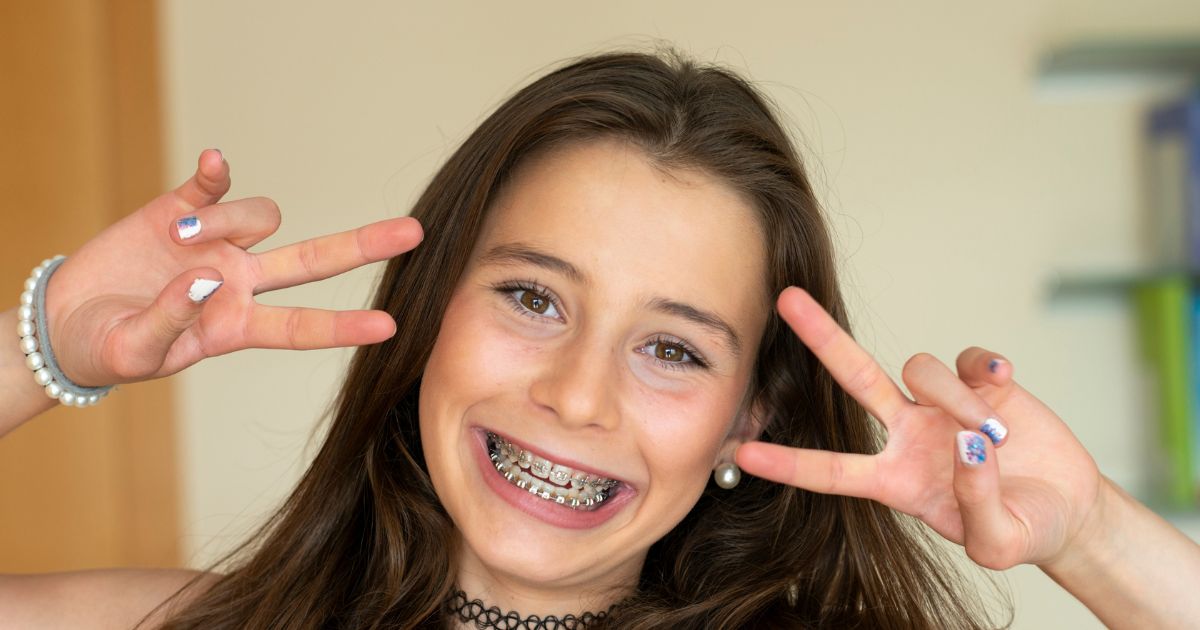
What Age Is Right for Braces?
Orthodontic treatment for children is usually thought of in two separate stages, and parents often confuse them. The first stage is an evaluation, a professional simply looking at how your child’s teeth and jaw are developing and deciding whether anything needs monitoring now or later. The second stage is active treatment, which is when braces are actually fitted, and this tends to happen later, once enough adult teeth have come through for the bite to be properly assessed and corrected.
Exact recommended ages vary between children and between clinicians, this is general guidance rather than a fixed rule. The only way to know what is right for your child specifically is a proper evaluation, not an age on a chart.
This is also why waiting a little while is often the right call rather than a delay. Bringing a child in too early for active treatment, before enough of the bite is visible, does not usually speed anything up. An orthodontist for children is trained to judge that timing properly, which is exactly why the evaluation step matters more than guessing an age at home.
Dentist or Orthodontist, Who Do You See First?
For most families, the general dentist is the right first stop. Your dentist already knows your child’s dental history, sees them regularly, and is well placed to notice early signs of crowding or bite issues at a routine check up. If orthodontic treatment for children looks like it might be needed, your dentist will refer you on to an orthodontist for a full assessment.
An orthodontic evaluation itself is usually a straightforward, low-pressure visit. The orthodontist will look at how your child’s teeth and jaw are developing, may take some form of imaging to see what is happening beneath the gumline, and will talk you through whether anything needs monitoring now, whether an interceptive step makes sense at this stage, or whether it is simply too early to say anything useful yet. None of this commits you to treatment on the day, it is an assessment first.
Traditional metal braces remain the most common option for children, largely because they suit a wide range of bite corrections and hold up well to the daily wear and tear of school life. For some older children and teenagers, clear aligners may be an option worth discussing, though suitability depends entirely on the individual case and is something to raise directly with the orthodontist during the evaluation, not to assume beforehand. Parents considering treatment for themselves at the same time can find more detail in our separate guide to braces for adults.
What Does It Cost?
Cost depends heavily on the type of treatment recommended and how long it runs for, which is exactly why it only gets decided after an evaluation, not before one. If you are budgeting ahead of time, it is also worth checking what your medical aid that covers braces actually includes, as plans vary widely on orthodontic benefits. For a full breakdown by treatment type, our braces in Johannesburg guide covers pricing in detail, this article is deliberately focused on age and next steps instead.
Frequently Asked Questions
At what age can my child get braces?
There is no single fixed age. Many orthodontists suggest an initial evaluation from around age seven, but actual treatment usually starts later, once enough adult teeth have come through to properly assess the bite. A professional evaluation is the only reliable way to know timing for your specific child.
Should I take my child to a dentist or an orthodontist first?
Start with your general dentist. They already see your child regularly, will notice early signs of crowding or bite issues at a routine check up, and can refer you to an orthodontist for a full assessment if orthodontic treatment looks like it may be needed.
What are the signs my child might need braces?
Common signs include crowded or overlapping teeth, a visible bite problem such as an overbite or crossbite, and baby teeth falling out much earlier or later than expected. Not every case needs treatment, but these signs are worth mentioning to your dentist at your child’s next check up.
Does my child need all their adult teeth before getting braces?
Not necessarily. Some children benefit from an early evaluation while several baby teeth are still present, even though active treatment usually waits until more adult teeth have come through. The right timing depends on your child’s individual development, which is exactly what an evaluation establishes.
What happens at an orthodontic evaluation for a child?
An evaluation is a straightforward, low pressure visit. The orthodontist looks at how your child’s teeth and jaw are developing, may take some form of imaging, and explains whether monitoring, an early step, or simply waiting is the right approach. It does not commit you to treatment on the day.
Does medical aid cover braces for kids in South Africa?
Coverage varies significantly between medical aid plans, and orthodontic benefits are often a separate, limited category rather than part of standard dental cover. It is worth checking your specific plan’s orthodontic benefit before booking a consultation, as this differs from scheme to scheme.
How much do braces for kids cost?
Cost depends on the type of treatment recommended and how long it runs, so it is only confirmed after an evaluation. Our separate braces in Johannesburg guide breaks down pricing by treatment type in detail, this article focuses specifically on age and next steps rather than cost.
How long does treatment usually take once braces are fitted?
Treatment length varies by case, sometimes quite considerably, so we would rather give you an honest answer at the evaluation than a generic average here. Your orthodontist will give you a realistic timeline once they have assessed your child’s specific bite and treatment needs.
Where to Find Us
Designer Smiles Inc provides general, cosmetic, and orthodontic dental care for children and adults across two practices in Johannesburg. If you are searching for a dentist near me in Rosebank or Bedfordview, both practices are listed below and both see children for routine check ups and orthodontic referrals.
Designer Smiles Inc, Rosebank
Address: Lumley House, 177 Jan Smuts, Rosebank, Johannesburg, 2193
Phone: 011 326 0938
Hours: Mon to Fri 08:00 to 17:00, Sat 08:00 to 13:00
Designer Smiles Inc, Bedfordview
Address: Sarlan Park, 20A Kloof Road, Bedfordview, Johannesburg, 2007
Phone: 011 326 0938
Hours: Thursdays 08:00 to 17:00, Saturday 08:00 to 13:00 when bookings allow
If your child is showing signs of crowding or a bite problem, book a check up and we will let you know if an orthodontic referral makes sense. For our full range of care, see our dental treatments in Johannesburg.
Book a Check Up