
AI Overview
Braces straighten misaligned teeth and correct bite issues using brackets, wires, or clear aligners. In South Africa, treatment costs vary widely depending on the type chosen, complexity of the case, and the orthodontist’s experience. At Designer Smiles Inc in Rosebank, Johannesburg, we offer a full range of orthodontic options tailored to children, teens, and adults.
Key Takeaways:
-
- Braces fix crowding, gaps, overbites, underbites, and crossbites.
-
- Options include metal, ceramic, lingual, and clear aligners.
-
- Local pricing in SA ranges roughly from R25,000 to R75,000+ depending on the type.
-
- Treatment usually takes between 12 and 24 months.
-
- Early assessment for children is recommended around age 7.
If you’ve been wondering about straightening your smile but feel a bit lost on where to start, you’re not alone. Many of our patients walk through our doors with the same questions about cost, comfort, and timing. This guide breaks it all down in plain language.
What Are Dental Braces and How Do They Work?
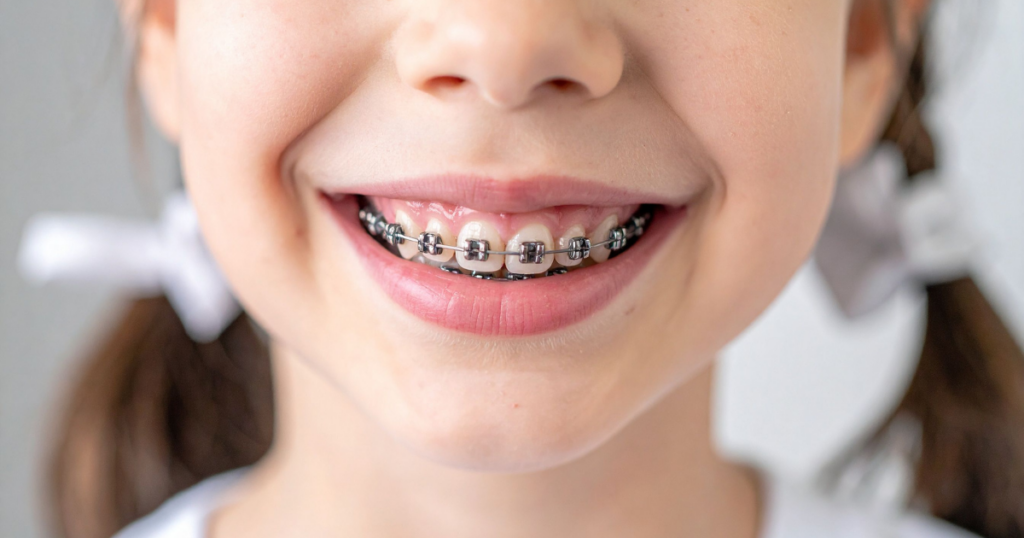
Dental braces are orthodontic appliances designed to gently move teeth into a better position over time. They work by applying steady, controlled pressure to your teeth, which encourages the bone around them to remodel. It’s a slow process, but that’s actually a good thing because rushing tooth movement can damage roots and supporting tissue.
A standard set-up includes brackets bonded to each tooth, an archwire that connects them, and small elastic ties or modules holding everything together. As your orthodontist adjusts the wire over months of treatment, the teeth shift bit by bit.
Expert Insight: At Designer Smiles Inc, we use digital scans rather than goopy impressions to plan treatment, so you’ll know roughly what your final smile looks like before we even bond the first bracket.
Modern braces for teeth aren’t the bulky metal mouthfuls of the 90s. Today’s brackets are smaller, smoother, and far more comfortable.
Common Orthodontic Issues Braces Can Fix
Braces aren’t just about appearance, although a straighter smile is usually the headline benefit. Crooked teeth and bite problems can lead to jaw pain, premature wear, gum disease, and even speech issues. Here’s what we treat most often:
-
- Crowding: When there’s not enough space for teeth to sit neatly, they overlap or twist.
-
- Spacing and gaps: Sometimes teeth drift apart, leaving noticeable gaps.
-
- Overbite: Upper front teeth bite too far over the lower ones.
-
- Underbite: Lower teeth sit in front of the uppers.
-
- Crossbite: Some upper teeth bite inside the lowers.
-
- Open bite: Front teeth don’t meet when the back teeth are closed.
Left untreated, these issues often worsen with age. We’ve seen adult patients who put it off in their twenties and finally addressed it in their forties, usually saying they wish they’d done it sooner.
Types of Dental Braces and Cost Comparison
There’s no one-size-fits-all answer. The right option depends on your case, your lifestyle, and your budget. Below we’ve laid out the main types of dental braces and cost ranges you’ll see across South Africa in 2026.
| Type | Visibility | Avg. SA Cost (2026) | Treatment Time |
| Metal braces | Highly visible | R25,000 – R45,000 | 18–24 months |
| Ceramic braces | Less visible | R35,000 – R55,000 | 18–24 months |
| Lingual braces | Hidden behind teeth | R60,000 – R90,000 | 18–30 months |
| Clear aligners | Nearly invisible | R40,000 – R75,000 | 6–18 months |
Traditional Metal and Ceramic Braces
Metal braces are the workhorses of orthodontics. They’re the most affordable, the most predictable, and they can handle even complex cases that aligners struggle with. Ceramic braces use tooth-coloured brackets that blend in more naturally, which adult patients tend to prefer. They cost a bit more and need a touch more care to avoid staining, but the trade-off is worth it for many.
Lingual Braces and Clear Aligners
Lingual braces sit on the inside surface of your teeth, so nobody knows you’re wearing them. They’re brilliant for professionals or anyone who’s camera-shy, though they take some getting used to and pricing reflects the technical skill required. Clear aligners, like Invisalign, are removable trays you swap out every week or two. They’re great for mild to moderate cases and let you eat without restrictions, which is a real win.
How Much Do Braces Cost in Johannesburg?
In Johannesburg, braces cost between R25,000 and R90,000 in 2026, depending on the type. Metal braces start around R25,000, ceramic from R35,000, clear aligners from R40,000, and hidden lingual braces reach about R90,000. Your exact braces price depends on case complexity, appliance type and treatment length, and is confirmed at your consultation.
At Designer Smiles Inc in Rosebank, every quote is written down and broken into the consultation, appliance, monthly adjustments, retainers and X-rays, so there are no surprises later. Most Johannesburg practices, including ours, spread payment across the treatment period, and some medical aid schemes contribute a portion, especially for patients under 18.
How Much Are Braces? A Breakdown of Pricing Factors
The most common question we get is, how much are braces actually going to cost me? The honest answer is: it depends. But here’s what shapes the braces price you’ll be quoted:
-
- Case complexity: A mild crowding case is far cheaper than a severe bite correction.
-
- Type of appliance: Metal is the most budget-friendly, lingual and aligners sit at the premium end.
-
- Treatment duration: Longer cases mean more adjustment visits.
-
- Orthodontist’s experience: Specialists with advanced training charge more, but you’re paying for fewer complications.
-
- Location: Practices in major metros like Johannesburg and Sandton often reflect city overheads.
-
- Medical aid cover: Some schemes contribute a portion, especially for under-18s.
Most SA practices, including ours, offer payment plans spread over the treatment period. We always recommend asking for a written quote that breaks down consultations, the appliance, monthly adjustments, retainers, and any X-rays. That way there are no surprises six months in.
Braces for Kids: The Right Age and What Parents Should Know
The South African Society of Orthodontists, in line with international guidelines, recommends a child’s first orthodontic check around age 7. That doesn’t mean they’ll get braces for kids immediately. It’s about catching developing problems early, when the jaw is still growing and easier to guide.
Most children who need full braces get them between ages 10 and 14, once most permanent teeth have come through. Early interceptive treatment, sometimes called Phase 1, might involve a palatal expander or partial braces to correct specific issues before the main treatment later.
Parent Tip: Watch for thumb-sucking past age 5, mouth-breathing, difficulty chewing, or teeth that look obviously crowded. These are good reasons to book an assessment.
Kids tend to adapt quickly to braces, far faster than adults in our experience. They’re also great at picking fun colours for their elastics, which makes the whole thing feel less clinical.
Choosing the Right Orthodontist for Your Treatment
Not every dentist is an orthodontist. A registered orthodontist has completed an additional three to four years of specialist training after dental school, and they’re registered as a specialist with the HPCSA in South Africa.
When you’re choosing a practice, look for:
-
- Specialist credentials and HPCSA registration.
-
- Range of treatment options offered (a practice that only does one type may push you toward it).
-
- Modern technology like digital scanners, 3D imaging, and treatment planning software.
-
- Clear communication about costs, timelines, and expected results.
-
- Patient reviews and before-and-after cases.
At Designer Smiles Inc, Dr. Sebasch Ranchod and Associates combine cosmetic and functional dentistry under one roof in Rosebank. We’ve built the practice around evidence-based treatment and digital workflows so that what you see in the plan is what you get in real life.
Life With Braces: Daily Care, Diet, and Maintenance Tips
Living with braces takes some adjustment, but it’s not as bad as people make out. Here’s our practical guide:
Foods to avoid:
-
- Hard biltong, nuts, and crusty rolls
-
- Sticky sweets like toffees and chewing gum
-
- Hard fruits bitten directly (cut apples into wedges instead)
-
- Ice (don’t chew it)
Daily routine:
-
- Brush after every meal, or at minimum twice a day, with a soft brush.
-
- Use interdental brushes to clean around brackets.
-
- Floss daily using floss threaders or a water flosser.
-
- Rinse with fluoride mouthwash before bed.
-
- Keep wax handy for any bracket that rubs.
Monthly check-ups are non-negotiable. We tighten wires, swap elastics, and check progress.We also recommend more frequent visits to your oral hygienist during treatment, since brackets and wires make plaque harder to remove at home. Skipping appointments can add months to your treatment.
Expert Tip: A water flosser is one of the best investments you can make during treatment. It clears debris that ordinary floss can’t reach around brackets.
Treatment Timeline and Results to Expect
Most full orthodontic treatments run between 12 and 24 months, with the average sitting around 18 months. Mild cases with clear aligners can wrap up in 6 to 9 months. Complex bite corrections or cases needing extractions may stretch to 30 months.
Here’s a rough phased view of what to expect:
-
- Phase 1 – Preparation (Month 1): Consultation, digital scans, X-rays, treatment plan, bonding.
-
- Phase 2 – Alignment (Months 2-8): Teeth straighten and rotate into rough position.
-
- Phase 3 – Bite correction (Months 9-18): Elastics and finer wires correct how your teeth meet.
-
- Phase 4 – Finishing and retention (Months 18+): Final detailing, removal, and retainers fitted.
Retainers are forever, sort of. Teeth want to drift back, so wearing retainers (usually nightly after the first year) is what keeps your investment locked in. We’ve seen too many patients regret not wearing them.
Frequently Asked Questions About Braces
What are braces and how do they work to straighten teeth?
Braces are orthodontic appliances that gently move teeth into better positions using steady, controlled pressure. They consist of brackets bonded to each tooth, connected by an archwire, with elastic ties holding everything together. As the wire is adjusted over months, teeth gradually shift, encouraging the bone around them to remodel safely.
What types of braces are available in South Africa and what do they cost?
South Africa offers four main types: metal braces (R25,000–R45,000), ceramic braces (R35,000–R55,000), lingual braces hidden behind teeth (R60,000–R90,000), and clear aligners like Invisalign (R40,000–R75,000). Treatment time typically ranges from 12–24 months depending on complexity and type chosen.
At what age should children get a first orthodontic assessment?
The South African Society of Orthodontists recommends a child’s first orthodontic check around age 7, even if braces aren’t needed immediately. This allows early detection of developing problems whilst the jaw is still growing. Most children receive full braces between ages 10–14 once permanent teeth have emerged.
How long does braces treatment typically take?
Most full orthodontic treatments last 12–24 months, with the average around 18 months. Mild cases with clear aligners may finish in 6–9 months, whilst complex bite corrections can extend to 30 months. Treatment duration depends on case complexity, appliance type, and patient compliance with appointments.
What foods should I avoid whilst wearing braces?
Avoid hard foods like biltong and nuts, sticky sweets such as toffees and chewing gum, hard fruits bitten directly, and ice. Cut apples into wedges instead. These restrictions prevent bracket damage and allow teeth to move properly throughout your braces treatment.
Why is wearing a retainer important after braces are removed?
Teeth naturally drift back to their original positions after braces are removed. Wearing retainers – typically nightly after the first year- keeps your teeth in their new positions permanently. Skipping retainer use often leads to relapse, undoing months or years of orthodontic treatment progress.
How much do braces cost in Johannesburg?
In Johannesburg, braces cost roughly R25,000 to R90,000 in 2026, depending on type. Metal braces are the most affordable, from R25,000, while hidden lingual braces sit at the premium end near R90,000. Book a consultation at our Rosebank practice for a written, case-specific braces price.
Does medical aid cover braces in Johannesburg?
Some South African medical aid schemes contribute towards braces, particularly for patients under 18, though cover varies by plan. At Designer Smiles Inc we provide a written quote you can submit to your scheme, and we offer payment plans spread across treatment to keep the braces price manageable.