
AI Overview
Dental implants are titanium posts surgically placed into the jawbone to replace missing teeth, offering a permanent, natural-looking alternative to dentures and bridges. At Designer Smiles Inc in Rosebank, Johannesburg, our team uses digital planning and evidence-based protocols to deliver implant treatments suited to South African patients. Costs, candidacy, and recovery vary, but with the right clinical team, success rates exceed 95%.
Key Takeaways:
- Dental implants are a permanent solution for missing teeth, lasting 20+ years with proper care.
- Three main types exist: endosteal, subperiosteal, and zygomatic.
- Suitability depends on bone density, gum health, and overall medical status.
- Costs in South Africa typically range from R18,000 to R35,000 per single implant.
- Designer Smiles Inc combines holistic and digital dentistry in the heart of Johannesburg.
Losing a tooth, whether through an accident on the rugby field, decay, or just the wear of time, can knock your confidence. We meet patients every week at our Rosebank practice who’ve put off treatment because they aren’t sure what their options are. This guide walks you through the essentials.
What Are Dental Implants and How Do They Work?
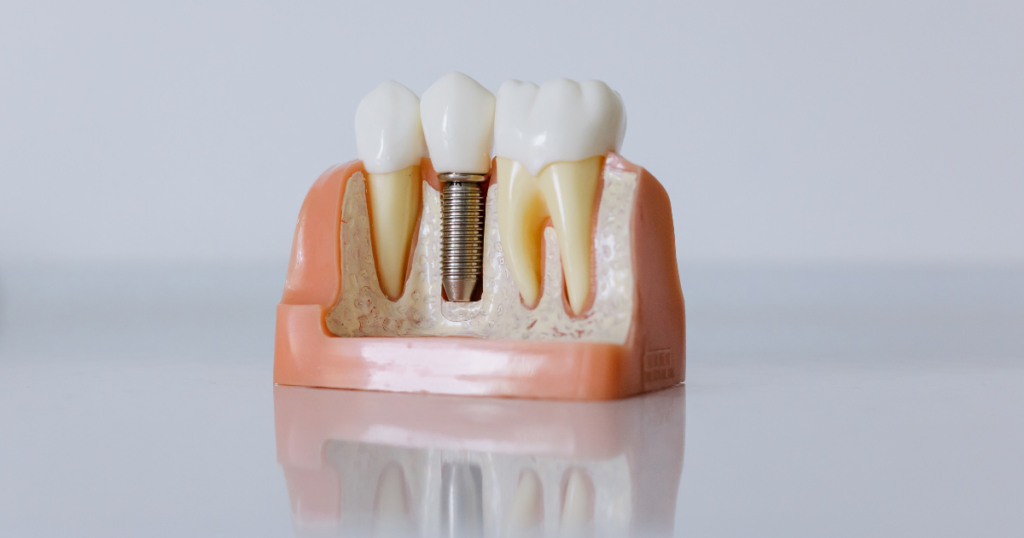
A dental implant is essentially a small titanium screw that’s surgically positioned into your jawbone, where it acts as an artificial tooth root. Once placed, the bone gradually fuses with the titanium in a process called osseointegration, which usually takes between three and six months. After that, a custom-made crown, bridge, or denture is fixed on top.
What makes implants different from older solutions is this fusion. Because the implant becomes part of your jaw, it stops the bone loss that typically follows tooth extraction, and it functions almost identically to a natural tooth when you chew, speak or smile.
Expert Insight from Dr Sebasch Ranchod: “We’ve seen patients who wore loose dentures for decades finally regain the ability to bite into an apple comfortably. That’s the real-world difference an implant makes, beyond just aesthetics.”
Titanium has been used in implant dentistry since the 1960s, and modern surface treatments now allow faster integration than ever before.
Types of Dental Implants and Replacement Tooth Options
Not every mouth is the same, and neither is every implant. The type we recommend depends on the condition of your jawbone, how many teeth need replacing, and your long-term goals.
Endosteal, Subperiosteal, and Zygomatic Implants Explained
Endosteal implants are the most common kind we place at Designer Smiles Inc. They’re inserted directly into the jawbone and suit patients with adequate bone density. Roughly 90% of cases we handle fall into this category.
Subperiosteal implants sit on top of the jawbone but under the gum tissue. We typically consider these for patients who can’t undergo bone grafting or who have reduced bone height.
Zygomatic implants are longer and anchor into the cheekbone rather than the upper jaw. They’re a specialist option for patients with severe upper-jaw bone loss who want to avoid extensive grafting procedures.
Single Implants vs Implant-Supported Bridges and Dentures
For one missing tooth, a single replacement tooth on an implant is usually ideal. For multiple gaps, an implant-supported bridge can replace several teeth using just two or three implants. And for full-arch restoration, the All-on-4 or All-on-6 technique secures a complete set of teeth onto a handful of implants, which is a popular choice for South Africans transitioning away from removable dentures.
Who Is a Suitable Candidate for an Implant?
Most healthy adults are candidates, but there are a few boxes to tick. We assess each patient using 3D CBCT scans and a thorough medical history before recommending treatment.
Good candidates typically have:
- Healthy gums free of active periodontal disease
- Sufficient jawbone density (or willingness to consider grafting)
- Generally good overall health
- A non-smoking status, or readiness to quit during healing
- Realistic expectations about treatment timelines
Certain conditions like uncontrolled diabetes, recent radiotherapy to the jaw, or heavy bruxism (tooth grinding) need careful management before we proceed. Smokers can still get implants, but research from the Journal of Clinical Periodontology shows failure rates roughly double in heavy smokers, so we always have a frank conversation about that.
Age isn’t really a barrier. We’ve placed implants for patients in their 80s with excellent results. What matters more is bone quality and general wellness.
The Dental Implant Procedure Step by Step
Here’s roughly how the process unfolds when you choose Designer Smiles Inc:
- Consultation and digital scans. We use 3D imaging to map your jaw and plan implant placement down to the millimetre.
- Treatment planning. Together we agree on the type of implant, timing, and prosthetic outcome.
- Any preparatory work. This might include extractions, bone grafting, or sinus lifts if needed. Healing here can take three to six months.
- Implant placement. The titanium post is inserted under local anaesthetic, with sedation available for nervous patients. Most single placements take under an hour.
- Osseointegration. You’ll wear a temporary crown or healing cap while the bone fuses with the implant, generally three to six months.
- Abutment and crown fitting. Once integrated, an abutment connects the implant to your custom-made crown, which is colour-matched to neighbouring teeth.
Tip: Ask about same-day or immediate-load implants. In selected cases we can fit a temporary tooth on the same day the implant is placed.
Recovery, Aftercare, and Long-Term Maintenance
Recovery from implant surgery is usually milder than patients expect. Mild swelling and bruising for two to three days is normal, and most people return to work within 24 to 48 hours. We prescribe pain relief and sometimes antibiotics, and we’ll ask you to stick to soft foods for about a week.
Long-term, looking after an implant isn’t all that different from looking after natural teeth. The main routine includes:
- Brushing twice daily with a soft-bristled brush
- Daily flossing or using interdental brushes around the implant
- Avoiding smoking, which significantly raises peri-implantitis risk
- Six-monthly check-ups and professional cleans at our Rosebank practice
With disciplined hygiene, dental implants can last 20 years or more. Studies suggest survival rates above 95% at the 10-year mark, which is genuinely impressive for any medical device.
Dental Implants Cost in the UK: What to Expect
Although the outline references UK pricing, we serve patients across Johannesburg and Sandton, so let’s focus on South African figures. The dental implants cost in South Africa typically ranges from R18,000 to R35,000 per single implant, including the abutment and crown. Full-arch restorations like All-on-4 can run between R120,000 and R250,000 per arch.
Factors that influence the price include:
- Brand of implant system (Straumann, Nobel Biocare, and others)
- Need for bone grafting or sinus lifts
- Type of crown material (zirconia vs porcelain-fused-to-metal)
- Sedation requirements
- Number of implants needed
Many South African medical aids contribute toward implant treatment, especially when there’s a clinical motivation. We help patients submit motivations to schemes like Discovery, Bonitas and Momentum.
Comparing the Cost of False Teeth, Bridges, and Implants
| Option | Initial Cost (ZAR) | Lifespan | Bone Preservation |
| Removable dentures (cost of false teeth) | R8,000 – R25,000 | 5–8 years | No |
| Traditional bridge | R12,000 – R25,000 per unit | 10–15 years | No |
| Single dental implant | R18,000 – R35,000 | 20+ years | Yes |
| All-on-4 full arch | R120,000 – R250,000 | 20+ years | Yes |
When you spread the cost over the lifespan, implants often work out more economical than repeatedly replacing dentures or bridges.
Benefits and Potential Risks of Choosing Implants
The benefits are pretty compelling. Implants restore around 90% of natural chewing force, compared to roughly 25% for conventional dentures. They preserve facial structure by preventing jawbone resorption, they don’t damage neighbouring teeth the way a bridge can, and they look indistinguishable from real teeth when done well.
But we’d be doing you a disservice if we didn’t mention the risks. These include:
- Infection at the implant site
- Nerve damage (rare, around 1% of cases)
- Sinus complications with upper-jaw implants
- Implant failure if osseointegration doesn’t occur
- Peri-implantitis from poor hygiene over time
Most of these are minimised by careful planning and choosing an experienced clinical team. At Designer Smiles Inc we use guided surgery and 3D planning to bring predictability to every case.
Industry Insight: South African implant dentistry has matured significantly over the past decade. Local clinicians now regularly publish in international journals, and the standard of care in Johannesburg compares favourably with London or Sydney, often at a fraction of the price.
Ready to Replace Missing Teeth With Confidence?
If you’ve been weighing up your options for a replacement tooth or full-arch restoration, the next step is a proper clinical assessment. Book a consultation with our team at Designer Smiles Inc and we’ll walk you through digital scans, costs, and a personalised treatment plan, no pressure attached. Get in touch with us today and let’s get your smile back to where it should be.
Frequently Asked Questions About Dental Implants
What exactly are dental implants and how do they work?
Dental implants are titanium posts surgically placed into your jawbone to replace missing teeth. The bone gradually fuses with the titanium through osseointegration (typically 3–6 months), after which a custom crown is attached. This process allows implants to function like natural teeth and prevent bone loss.
How long do dental implants last?
With proper care, dental implants can last 20 years or longer. Studies show survival rates above 95% at the 10-year mark. Longevity depends on disciplined oral hygiene, regular check-ups, and avoiding smoking, which significantly increases failure risk.
What are the different types of dental implants?
The three main types are endosteal (most common, inserted directly into jawbone), subperiosteal (placed on top of the jawbone under gum tissue for patients with reduced bone height), and zygomatic (longer implants anchoring into the cheekbone for severe upper-jaw bone loss).
How much do dental implants cost in the UK?
In South Africa, single dental implants typically range from R18,000 to R35,000 per tooth including the abutment and crown. Full-arch restorations like All-on-4 cost between R120,000 and R250,000 per arch, depending on implant system, grafting needs, and crown materials.
Am I a suitable candidate for dental implants?
Most healthy adults qualify. Key criteria include healthy gums, sufficient jawbone density (or willingness to graft), good overall health, and non-smoking status. Conditions like uncontrolled diabetes or recent jaw radiotherapy require careful management, but age isn’t a barrier.
What are the main risks and complications of dental implants?
Potential complications include infection, nerve damage (rare, ~1%), sinus issues with upper-jaw implants, implant failure if osseointegration fails, and peri-implantitis from poor hygiene. Risks are minimised through careful planning and experienced clinical teams using 3D guided surgery.