
An oral hygienist is a registered oral health professional who removes plaque and tartar, treats and prevents gum disease, and coaches your home routine. A standard scale and polish takes about 30 to 45 minutes and typically costs between R450 and R950 at a South African private practice.
We know the idea of someone poking around your gums with a metal instrument isn’t anyone’s favourite Tuesday afternoon. So we’ve written this the way we’d explain it in the chair: what happens, why it matters, how it feels, and what it costs in South Africa.
Key Takeaways
- A hygienist focuses on prevention, removing plaque and tartar, screening for gum disease, and coaching home care, while a dentist diagnoses and treats problems.
- A typical scale and polish takes 30 to 45 minutes, though the duration varies with how long it’s been since your last visit and the amount of tartar build-up.
- In South Africa, a standard teeth cleaning typically costs between R450 and R950 at a private practice.
- Most people experience discomfort rather than pain: vibration, cool water and mild pressure. Sensitivity can be managed if you tell your hygienist beforehand.
- The standard recommendation is a six-monthly visit for most adults, though people with gum disease, smokers, and patients with diabetes may benefit from a three to four month interval.
- Regular visits prevent larger bills for fillings and gum treatment later, making preventative care the more economical choice in the long term.
What Does an Oral Hygienist Do?
An oral hygienist is a registered oral health professional who focuses on the prevention side of dentistry. Where a dentist diagnoses and treats problems like cavities, crowns and root canals, a hygienist is the person who keeps things from getting to that stage in the first place. In practical terms, here’s what an oral hygienist does during a typical visit:
- Removes plaque (the soft, sticky film that builds up daily) and tartar (also called calculus, the hardened version that a toothbrush can’t shift).
- Screens your gums for signs of gingivitis and early gum disease.
- Polishes away surface staining from coffee, tea, red wine and tobacco.
- Applies a fluoride treatment where appropriate, or a fluoride-free alternative if you prefer our holistic dentistry approach.
- Coaches you on brushing technique, flossing and interdental brushes so your home routine actually works.
Think of the hygienist as the person who resets your mouth to a clean baseline, then hands you the tools to keep it there between visits.
Oral Hygienist vs Dentist: Who Does What?
The short version: a dentist treats dental problems, an oral hygienist helps you avoid them. Both are registered with the Health Professions Council of South Africa, and in a well-run practice they work as a team on your care.
| Oral hygienist | Dentist |
|---|---|
| Scale and polish | Fillings and restorations |
| Gum health assessments | Diagnosis of decay and disease |
| Stain removal | Root canals, extractions, crowns |
| Fluoride application | Cosmetic treatments, implants |
| Home care coaching | Prescriptions and referrals |
A hygienist works within a defined scope of practice. If they spot something that needs a dentist’s eye, such as a suspected cavity or a cracked filling, they’ll flag it and loop your dentist in. You often see both in the same visit, which saves you a trip and keeps everyone on the same page about your mouth.
How Much Is Teeth Cleaning in South Africa?
In South Africa, a standard scale and polish typically costs somewhere in the region of R450 to R950 at a private practice, depending on the city, the practice and what’s included. Many medical aid schemes contribute towards one or two cleanings per beneficiary per year from your dental benefit, though cover varies scheme to scheme.
A few things affect the final teeth cleaning price: whether X-rays are taken on the day, whether a fluoride treatment is included, the amount of scaling required (a light six-monthly clean versus a deep clean after years away), and whether the visit includes a dentist’s examination as well.
Our own fee for a scale and polish is confirmed when you book, and we’ll tell you upfront what’s included. For a fuller picture of preventative care at our Rosebank and Bedfordview rooms, see our general dentistry treatments.
One practical tip: if cost is a concern, ask about it upfront. Skipping cleanings to save money often leads to larger bills for fillings and gum treatment later, so a planned six-monthly visit is usually the more economical route.
What Happens During a Cleaning Appointment
This is the part most nervous patients want spelled out. A professional cleaning is a set process, not a mystery. Here’s the step by step, in the order it happens in our chairs.
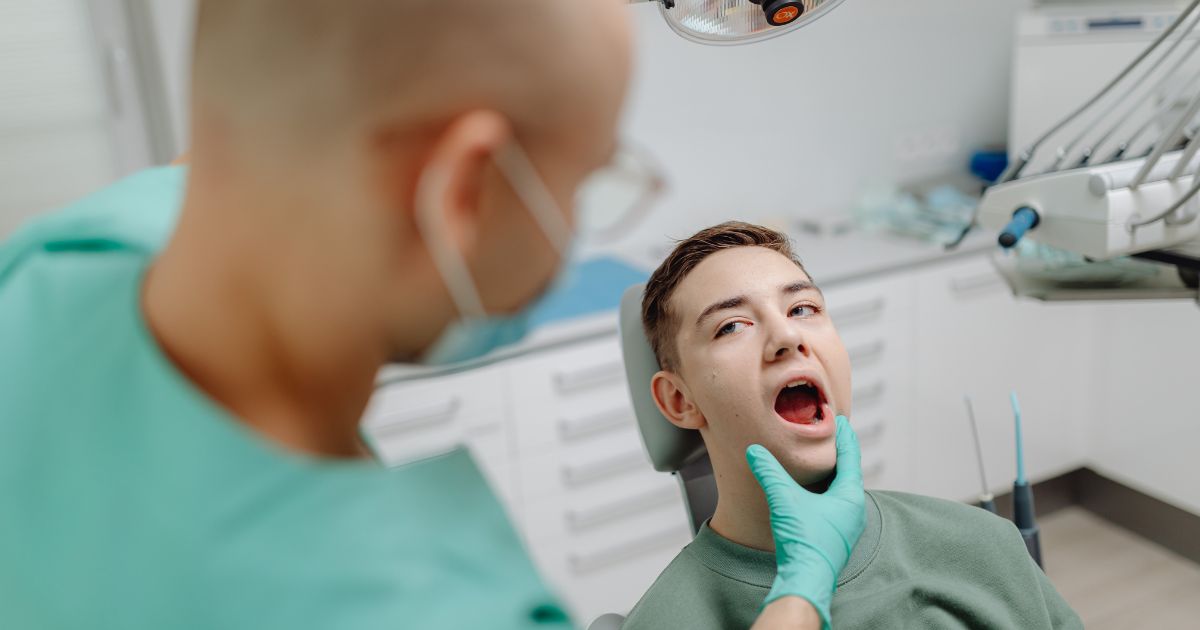
- Check-in and medical history review. We confirm any changes to your health, medication or pregnancy status, since these can affect treatment choices.
- Examination and assessment of your teeth and gums.
- Scaling to remove plaque and tartar from tooth surfaces and just below the gumline.
- Polishing to smooth the enamel and lift surface stains.
- Flossing and interdental cleaning to clear anything loosened during scaling.
- Fluoride or fluoride-free treatment, if indicated and if you’d like it.
- Home care coaching, tailored to what we actually saw in your mouth that day.
- Booking your next visit, usually in six months.
Examination and Assessment
Before any instrument touches a tooth, we take a proper look. That means checking each tooth surface, measuring gum pockets where needed, noting any bleeding on probing, and asking about sensitivity or bleeding gums at home. If you’ve had X-rays recently we’ll review them; if not, we may recommend new ones so nothing hides between teeth. This assessment is what tells us how gentle or thorough your cleaning needs to be.
Scaling, Polishing and Fluoride Treatment
Scaling is done with an ultrasonic scaler, a small handpiece that uses high-frequency vibrations and a fine water spray to lift tartar off enamel. It tickles more than it hurts for most people. Stubborn spots may need hand instruments. Polishing follows, using a soft rubber cup and a mildly abrasive paste to smooth the surface and remove staining. Finally, a fluoride varnish (or a fluoride-free option) helps strengthen enamel. Outcomes can vary depending on the state of your gums at the start.
How Long Does Teeth Cleaning Take?
A standard scale and polish takes about 30 to 45 minutes for most adults. If you’ve kept up with six-monthly visits, you’re usually closer to the 30 minute mark. If it’s been a couple of years, or there’s heavy tartar and staining to clear, it can stretch to 60 minutes or a bit more. Build-up since your last visit, gum health, staining and sensitivity all push the time up or down, and we work at your pace with breaks whenever you need.
Is Teeth Cleaning Painful?
For most people, a routine cleaning is uncomfortable at worst, not painful. It typically feels like vibration, cool water, a bit of pressure and the occasional twinge, rather than sharp pain. That said, we won’t pretend everyone finds it a breeze, so here’s an honest breakdown. You’re more likely to feel discomfort if:
- Your gums are already inflamed or you have bleeding gums, which makes the tissue tender.
- You’ve left it a long time between visits and there’s heavy calculus to remove.
- You have exposed tooth roots or generalised sensitivity.
- You clench or grind, which can leave your jaw sore from keeping your mouth open.
What helps: tell us before we start. We can adjust the ultrasonic scaler’s power, use a desensitising paste, take breaks, or apply a topical anaesthetic gel on tender areas. The goal is a manageable experience, not a heroic one.
How Often Should You See an Oral Hygienist?
The standard recommendation is a six-monthly visit, which suits most adults with reasonably healthy gums and a decent home routine. Twice a year is often enough to stay ahead of tartar build-up and catch early signs of gum disease before they turn into something that needs a dentist. Some people benefit from seeing a hygienist roughly every three to four months:
- Patients with a history of gum disease or ongoing gingivitis.
- Smokers and heavy coffee, tea or red wine drinkers.
- Patients wearing braces, aligners or complex bridgework.
- People with diabetes, since blood sugar and gum health influence each other.
- Pregnant patients, as hormonal changes can inflame gums.
We’ll tell you honestly at your visit what your mouth actually needs, rather than defaulting to a one-size-fits-all schedule. If you’re overdue, don’t try to catch up all at once, just book the next available slot and start from there.
Before and After Your Cleaning
Signs you shouldn’t wait for your six-month slot: persistent bleeding gums, ongoing bad breath, visible staining, tenderness when you chew, or gums that look red and puffy rather than pink and firm. These are the mouth’s way of asking for help.
Before your visit, brush and floss as normal a couple of hours beforehand (don’t scrub extra hard on the day, sore gums make scaling less comfortable), eat something light, and bring a list of medications and any recent health changes. If you have dental anxiety, tell reception when you book so the visit can be planned around it.
Afterwards, expect mild gum tenderness for a day or two if there was inflammation to begin with. Avoid staining foods and drinks (red wine, curry, dark coffee) for the first 24 hours after a polish, wait about 30 minutes before eating if you’ve had a fluoride varnish, and resume gentle brushing that evening, adding flossing or interdental brushes if we’ve recommended them.
If you’ve been thinking about brightening your smile as well, a cleaning is the right first step. Whitening works best on a clean surface, and you can read more on our teeth whitening page.
Frequently Asked Questions
How much is teeth cleaning in South Africa?
A standard scale and polish at a South African private practice typically costs in the region of R450 to R950, depending on the city and what’s included. Many medical aid schemes contribute towards one or two cleanings a year from your dental benefit, though cover varies by plan.
Is teeth cleaning painful?
For most patients a routine cleaning is uncomfortable rather than painful, feeling like vibration, cool water and mild pressure. Tenderness is more likely if your gums are already inflamed or it’s been years since your last visit. Tell us before we start and we can adjust technique, use desensitising products or take breaks.
How long does teeth cleaning take?
A standard scale and polish takes about 30 to 45 minutes for most adults. Regular six-monthly visits tend to be quicker, closer to 30 minutes, while first cleanings after a long gap, heavy staining or gum inflammation can stretch to an hour or more. We’ll give you a realistic time estimate when you book.
What is the difference between an oral hygienist and a dentist?
An oral hygienist is a registered oral health professional focused on prevention: scaling, polishing, gum health and home care coaching. A dentist diagnoses and treats problems like cavities, root canals, extractions and crowns. They work as a team, and you often see both in the same visit for a full check and clean.
Can a hygienist whiten my teeth?
A hygienist can remove surface staining through polishing, which often brightens your smile noticeably. True whitening, which lightens the internal shade of the tooth, falls to your dentist using professional whitening systems. If you’d like to explore this after your cleaning, see our teeth whitening page for options.
Oral Hygienist in Rosebank & Bedfordview
Ready to put this into practice? Our registered oral hygienists see patients at both our Rosebank and Bedfordview rooms, working alongside our dentists for scale-and-polish appointments, gum health checks and home-care coaching. Hygiene visits are booked separately from general dentistry, so you’re not waiting on a full consultation slot just to get your teeth cleaned.
Where to Find Us
Designer Smiles Inc, Rosebank
Address: 177 Jan Smuts Avenue, Lumley House, Rosebank, Johannesburg, 2196
Phone: 011 326 0938
Hours: Mon to Fri 08:00 to 16:00
Designer Smiles Inc, Bedfordview
Address: 20A Kloof Road, Cnr The Parade, Sarlan Park, Bedfordview, Johannesburg, 2008
Phone: 011 615 9352
Hours: Mon to Fri 08:00 to 16:00
Ready for your next cleaning? Book a scale and polish at our Rosebank or Bedfordview practice and we’ll take good care of the rest.
Book a Consultation