
Adults can have braces at any age. Teeth move throughout life, so the biological process that straightens them works just as well at 45 as it does at 15. Adult treatment often takes a little longer than it does for a teenager, and most adults choose a discreet option such as ceramic or lingual braces rather than standard metal. If you are looking into this for a child rather than yourself, timing works differently, our guide to braces for kids covers the right age for an evaluation.
The question behind most adult enquiries is not really whether braces work. It is whether they are worth it now, whether anyone will notice, and how they will fit around a job and a life. This guide answers those, honestly, without pretending the trade-offs do not exist.
Key Takeaways
- There is no upper age limit for braces. What matters is the health of your gums and the bone supporting your teeth, not the number on your ID.
- Adult treatment usually takes longer than teenage treatment, because adult bone remodels more slowly and adult cases are often more complex.
- Ceramic and lingual braces are the discreet options. Ceramic uses tooth-coloured brackets, lingual sits behind the teeth and is essentially invisible from the front.
- Medical aid cover for adult orthodontics is far more limited than for children. Many schemes cap or exclude it entirely, so check before you commit.
- Gum disease must be treated and stable before braces go on. Moving teeth in unhealthy gums can make things worse.
Can Adults Get Braces?
Yes. Adults can have braces at any age, and there is no cut-off point. Orthodontic treatment works by applying gentle, sustained pressure that remodels the bone around a tooth, and that process continues throughout life. The mechanism does not switch off at a particular birthday.
What does matter is the condition of the foundation. Before treatment starts, the dentist checks that your gums are healthy and that the bone holding your teeth is sound. Active gum disease has to be treated and stable first, because moving teeth through inflamed tissue can worsen bone loss. Old fillings, crowns and missing teeth also shape the plan, since they affect how force is applied and where teeth have room to move.
This is why adult orthodontics starts with a full assessment rather than a straight yes. The honest answer for most adults is that treatment is possible, and the useful conversation is about which option suits your bite, your timeline and your budget.
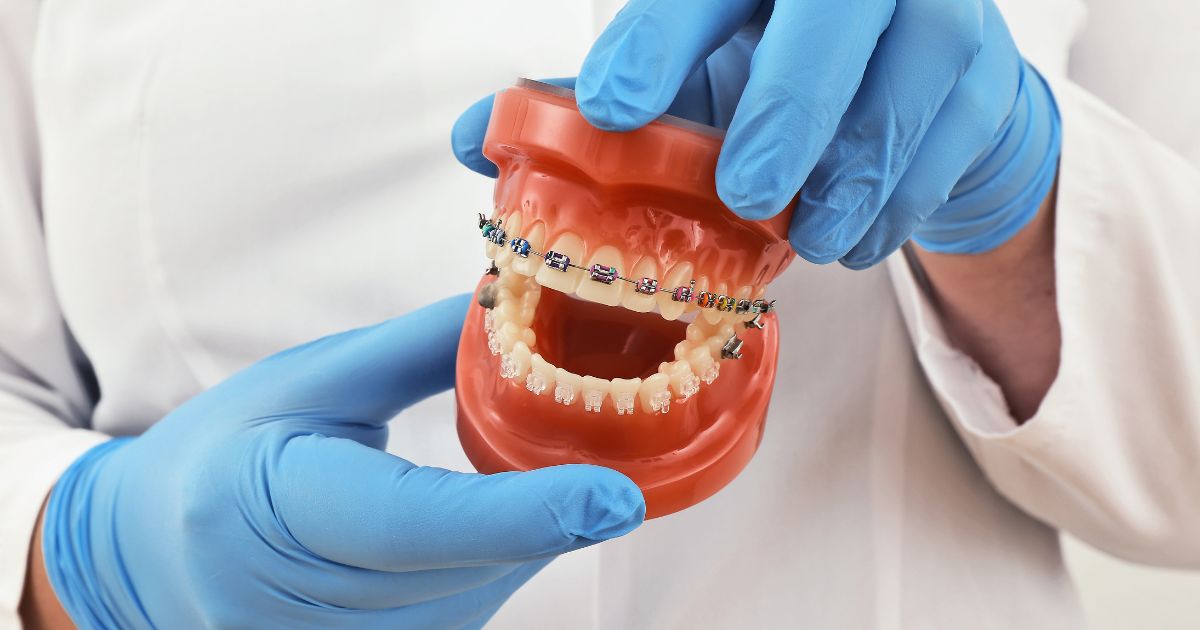
Your Options as an Adult
Adults have more choice than most people expect, and the differences are about visibility, comfort and how much of the work happens where people can see it.
Metal Braces
The traditional option: stainless steel brackets bonded to the front of the teeth, connected by a wire. They are the most visible choice, but they are also the most versatile, handling complex bite corrections that other systems struggle with. They are typically the most affordable route, and modern brackets are considerably smaller than the ones you may remember from school.
Ceramic Braces
Ceramic braces work exactly like metal ones but use tooth-coloured or clear brackets, so they blend in at conversational distance. They are the most popular discreet option for adults. The trade-offs are worth knowing: ceramic brackets are more brittle than metal, so they can chip, and the clear elastic ties can pick up staining from coffee, tea, red wine and smoking between adjustments.
Lingual Braces
Lingual braces are fitted to the tongue side of the teeth, which makes them essentially invisible from the front. For adults in client-facing roles this is often the deciding factor. They take more getting used to than front-mounted braces, particularly for speech in the first few weeks, and because each bracket is custom-made they sit at the higher end of the price range.
Clear Aligners
Removable clear aligners are an alternative to fixed braces for many adult cases, though not all. Complex rotations and significant bite corrections are still better handled with brackets and wire. If you are weighing this route specifically, our Invisalign guide covers how aligners compare and when they are suitable.
How Long Do Braces Take for Adults?
Adult treatment generally takes longer than the same correction would in a teenager. Adult bone remodels more slowly, and adult cases tend to be more complicated, often involving existing dental work, teeth that have drifted after an extraction, or wear from years of grinding.
Your dentist gives you an estimated duration at the treatment planning stage, based on your specific case rather than an average. Outcomes and timelines vary from patient to patient. What is within your control is wearing what you are asked to wear and keeping your adjustment appointments, because missed appointments are the most common reason treatment runs over.
Does Medical Aid Cover Braces for Adults?
Cover for adult orthodontics is much more limited than it is for children. Many South African schemes restrict orthodontic benefits to dependants under a certain age, cap the benefit well below the cost of treatment, or exclude adult orthodontics altogether as a cosmetic procedure.
What varies is not just the scheme but the specific plan you are on, so a general answer is worth very little here. Before you commit to treatment:
- Phone your scheme and ask specifically about orthodontic benefits for an adult member, not about dental benefits generally.
- Ask whether there is an age limit on the orthodontic benefit and what the annual or lifetime cap is.
- Request written pre-authorisation. Verbal confirmation over the phone is not the same thing.
- Ask whether the benefit is paid once or spread across the treatment period, since orthodontics runs across more than one benefit year.
We supply the treatment codes and a written plan so your scheme has what it needs to assess the claim. Where cover falls short, payment arrangements across the treatment period can be discussed at your consultation.
Braces and Everyday Adult Life
The practical concerns adults raise most often are speech, eating and work, and all three are manageable once you know what to expect.
Speech adjusts within a few weeks for most people, and fastest with front-mounted braces. Lingual braces take longer because the brackets sit where your tongue works. Eating changes more than you might expect: hard, sticky and chewy foods are the main casualties, and cutting food smaller becomes a habit. Cleaning takes longer, and interdental brushes stop being optional.Most orthodontists also recommend seeing your oral hygienist more often than usual while you’re in braces, since brackets and wires trap plaque a toothbrush can’t reach.
For work, the honest position is that ceramic and lingual options exist precisely because adults asked for them. Most colleagues notice ceramic braces far less than the wearer expects, and lingual braces are usually not noticed at all.
Retainers are not the optional part. Teeth have a memory and will drift back toward their original position if nothing holds them. Every adult who completes orthodontic treatment needs a retainer afterwards, often long term. Factor that in from the start rather than treating it as an afterthought at the end.
What Adult Braces Cost
Cost depends on the type of braces, how complex the correction is and how long treatment runs. Ceramic and lingual options cost more than metal, and lingual is typically the highest because each bracket is custom-made for your teeth.
Rather than repeat figures here, our full braces cost guide sets out current South African ranges by type. You will receive an exact written quotation after your assessment, because a real number needs a real look at your teeth. For what an initial consultation itself involves, see our guide to dentist prices in Johannesburg.
Booking an Assessment
Adult orthodontics starts with an assessment: photographs, X-rays and an examination of your teeth, gums and bite. From that you get a written treatment plan setting out the options that suit your case, roughly how long each would take, and what each involves. Nothing is fitted on the day, and nothing is booked without your say-so.
Frequently Asked Questions
Am I too old for braces?
No. There is no upper age limit for orthodontic treatment. Teeth move throughout life, so braces work at any age. What matters is that your gums are healthy and the bone supporting your teeth is sound, which is assessed before treatment begins rather than assumed from your age.
How long do braces take to straighten teeth for adults?
Adult treatment usually takes longer than the same correction in a teenager, because adult bone remodels more slowly and adult cases are often more complex. Your dentist estimates your duration at the planning stage based on your specific case. Keeping adjustment appointments is the biggest factor within your control.
Does medical aid cover braces for adults?
Cover is far more limited for adults than for children. Many South African schemes restrict orthodontic benefits to younger dependants, cap the benefit, or exclude adult orthodontics entirely. It depends on your scheme and your specific plan, so confirm in writing and request pre-authorisation before treatment starts.
What are ceramic braces?
Ceramic braces work like metal braces but use tooth-coloured or clear brackets, so they are much less noticeable. They are the most popular discreet choice for adults. The trade-offs are that ceramic brackets are more brittle than metal and the clear ties can stain from coffee, tea, red wine and smoking.
What are lingual braces?
Lingual braces are fitted to the tongue side of the teeth rather than the front, which makes them essentially invisible when you smile. They suit adults in client-facing roles. They take longer to adjust to, particularly for speech, and cost more because each bracket is custom-made for your teeth.
How much are braces for adults in South Africa?
Cost depends on the type of braces, the complexity of the correction and how long treatment takes, with lingual typically highest and metal lowest. Our braces cost guide sets out current South African ranges by type. You receive an exact written quotation after your assessment.
Where to Find Us
Designer Smiles Inc is a cosmetic and holistic dental practice with rooms in Rosebank and Bedfordview. Both see new patients.
Designer Smiles Inc, Rosebank
Address: Lumley House, 177 Jan Smuts Ave, Rosebank, Johannesburg, 2196
Phone: 011 326 0938
Hours: Mon to Fri 08:00 to 16:00
Designer Smiles Inc, Bedfordview
Address: 20A Kloof Road, Cnr The Parade, Sarlan Park, Bedfordview, Johannesburg, 2008
Phone: 011 615 9352
Hours: Mon to Fri 08:00 to 16:00
Book an orthodontic assessment at our Rosebank or Bedfordview rooms and you’ll get a written treatment plan with your options set out before anything is fitted.
Book an Assessment